
MEAN Stack vs MERN Stack
September 7, 2024
Code
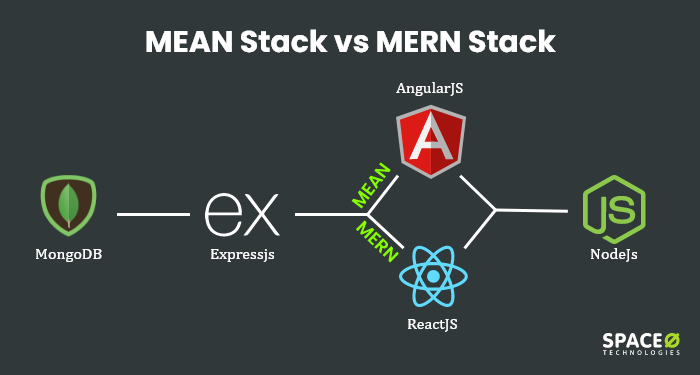
Comparing MEAN and MERN Stacks
MEAN (MongoDB, Express.js, Angular, Node.js) and MERN (MongoDB, Express.js, React, Node.js) are two popular JavaScript-based full-stack development frameworks. Both stacks are designed for building modern web applications but have key differences in architecture and usability.
Technology Stack Comparison
| Component | MEAN Stack | MERN Stack |
|---|---|---|
| Database | MongoDB | MongoDB |
| Backend | Express.js | Express.js |
| Frontend | Angular | React |
| Server | Node.js | Node.js |
Key Differences
1. Frontend Framework
- MEAN: Uses Angular, a TypeScript-based framework developed by Google. It follows a structured, component-based approach with built-in two-way data binding.
- MERN: Uses React, a JavaScript library developed by Facebook. It follows a flexible, component-based approach with a virtual DOM for efficient UI updates.
2. Learning Curve
- MEAN: Requires knowledge of TypeScript and Angular-specific concepts such as modules, services, and dependency injection.
- MERN: More beginner-friendly as React primarily uses JavaScript with JSX, making it easier for developers to transition from basic JavaScript.
3. Performance & Scalability
- MEAN: Angular’s two-way data binding can sometimes lead to performance bottlenecks in complex applications.
- MERN: React’s virtual DOM and one-way data flow make it more efficient in handling dynamic UI updates.
4. Community & Ecosystem
- MEAN: Has strong enterprise adoption, especially for large-scale applications due to Angular’s structured framework.
- MERN: More popular among startups and modern web applications due to React’s flexibility and growing ecosystem.
When to Choose MEAN or MERN?
- Choose MEAN if you prefer a structured framework with TypeScript and need built-in functionalities like form validation and routing.
- Choose MERN if you prefer flexibility, a dynamic UI, and a large React ecosystem with third-party libraries.
Conclusion
Both MEAN and MERN have their advantages depending on the project requirements. MEAN is ideal for enterprise-level applications requiring a structured approach, while MERN is better suited for dynamic, interactive UIs with high performance., duo hinc vide aliquip et. Ex atqui voluptatibus eum, cu case intellegebat eum, mea ex regione patrioque signiferumque.
An has alterum nominavi. Nam at elitr veritus voluptaria. Cu eum regione tacimates vituperatoribus, ut mutat delenit est. An has alterum nominavi.